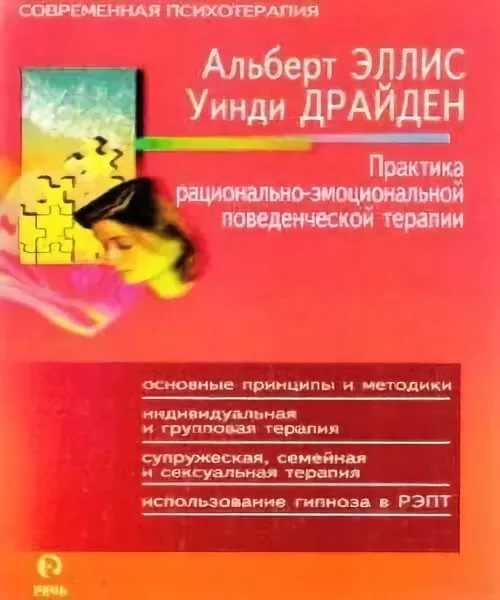
РЭПТ: рационально-эмотивная поведенческая терапия. Полный курс от Альберта Эллиса - Альберт Эллис
Книгу РЭПТ: рационально-эмотивная поведенческая терапия. Полный курс от Альберта Эллиса - Альберт Эллис читаем онлайн бесплатно полную версию! Чтобы начать читать не надо регистрации. Напомним, что читать онлайн вы можете не только на компьютере, но и на андроид (Android), iPhone и iPad. Приятного чтения!
Шрифт:
Интервал:
Закладка:
Journal of Consulting Psychology, 31, 108–118.
**Peale, N. V. (1952). The power ofpositive thinking. New York: Fawcett.
Perls, F. (1969). Gestalt therapy verbatim. New York: Delta.
*Peterson, C., Maier, S. F., & Seligman, M. E. P. (1993). Learned helplessness. New York: Oxford.
*Phadke, K. M. (1982). Some innovations in RET theory and practice. Rational Living, 17(2), 25–30.
*Phillips, E. L., & Wiener, D. N. (1966). Short-term psychotherapy and structured behavior change. New York: McGraw-Hill.
*Pietsch. W. V. (1993). The serenizv prayer. San Francisco: Harper San Francisco.
*Plutchik, R., & Kelerman, H. (1990). Emotion, psychopathology, and psychotherapy. San Diego, CA: Academic Press.
Popper, K. R. (1985). Popper selections. ed. by David Miller. Princeton, NJ: University Press.
**Powell, J. (1976). Fully human,fulZv afire. Niles, IL: Argus.
*Prochaska, J. 0., DiClemente, C. C., & Norcross, J.C. (1992). In search of how people change: Applications to addictive behaviors. American Psychologist 47, 1102–1114.
*Raimy, V. (1975). Misunderstandings of the self San Francisco: Jossey-Bass.
Reich, W. (1960). Selected writings. New York: Farrar, Straus and Cudahy.
*Robin, M. W., & DiGiuseppe, R. (1993). Rational-emotive therapy with an avoidant personality. In K. T. Kuehlwein & H. Rosen, eds. Cognitive therapies in action (pp. 143–159).
Rogers, C. R (1957). The necessary and sufficient conditions of therapeutic personality change. Journal of Consulting Psychology, 21, 95-103.
Rogers, CR. (1961). On becoming a person. Boston: Houghton-Mifflin.
*Rorer, L. G. (1989). Rational-emotive theory: I. An integrated psychological and philosophic basis. II. Explication and evaluation. Cognitive Therapy and Research, 13, 75-492; 531–548.
*Rotter, J.; B. (19 54). Social learnin,q and clinical psychology. Englewood Cliffs, NJ: Prentice-Hall.
*Rush, A. J. (1989). The therapeutic alliance in short-term cognitive-behavior therapy. In W. Dryden & P. Trower, eds. Cognitive psychotherapy: Stasis and change (pp. 59–72). London: Cassell.
**Russell, B. (1950). The conquest of happiness. New York: New American Library.
*Safran, J. D., & Greenberg, L. S., eds. (1991). Emotion, psychotherapy, and change. New York: Guilford.
*Salter, A. (1949). Conditioned reflex therapy. New York: Creative Age. Sampson, E. E. (1989) The challenge of social change in psychology. Globalization and psychology’s theory of the person. American Psychololrist, 44, 914–921.
Sampson, E.E. (1989) The challenge of social change in psychology. Globalization and psychology’s theory of the person. American Psychologist, 44, 914–921.
*Satir, V. (1978). People making. Palo Alto: Science & Behavior Books.
*Schwartz, R. (1993). The idea of balance and integrative psychotherapy. Journal of Psychotherapy Integration, 3, 159–181.
Schwartz, R.B. (1997). Consider the simple screw: cognitive science, quality improvement, and psychotherapy. Journal of Consulting and Clinical Psychology, 65, 970–983.
*Scoggin, F., Bynum, J., Stephens, G., & Calhoun, S. (1990). Efficacy ofself administered treatment programs: Meta-analytic review. Professional Psychology, 21, 42–47.
*Scoggin, F., & McElreath, L. (1994). Efficacy of psychosocial treatment for geriatric depression: A quantitative review. Journal of Consulting and Clinical Psychology, 62, 68–74.
*Seligman, M. E. P. (1991). Learned optimism. New York: Knopf.
*Shibles. W. (1974). Emotion: The method of philosophical therapy. Whitewater, Wl: Language Press.
*Shihan, V., & Rohrbaugh, M. (1994). Paradoxical intervention. In R. J. Corsini, ed. Encyclopedia of psychology, Vol. 3 (pp. 5–8). New York: Wiley.
*Shostrom, E. L. (1976). Actualizing therapy. San Diego, CA: Edits.
**Sichel, J., & Ellis, A. (1984). RETself-helpji1rm. New York: Institute for Rational-Emotive Therapy.
*Silverman, M. S., McCarthy, M., & McGovern, T. (1992). A review of outcome studies of rational-emotive therapy from 1982–1989. Journal of Rational-Emotive and Cognitive-Behavior Therapy, 10(3), 111–186.
**Simon, J. L. (1993). Good mood. LaSalle, IL: Open Court.
*Smith, M. L., & Glass, G. V. (1977). Meta-analysis of psychotherapy outcome studies. American Psychologist, 32, 752–760.
*Smith, M. L., Glass, G. V., & Miller, T. I. (1980). The benefits of psychotherapy. Baltimore: Johns Hopkins University Press.
*Sookman, D., Pinard, G., & Beauchemin, N. (1994). Multidimensional schematic restructuring treatment for obsessions: Theory and practice. Journal of Cognitive Psychotherapy, 8, 175–207.
**Spillane, R. (1985). Achieving peak performance: A pJychology of success in the organization. Sydney, Australia: Harper & Row.
*Spivack, G., Platt, J., & Shure, M. (1976). The problem-solving approach to adjustment. San Francisco: Jossey-Bass.
*Spivack, G., & Shure, M. (1974). Social adjustment in young children. San Francisco: Jossey-Bass.
*Stanton, H. (1977). The utilization of suggestions derived from rational emotive therapy. International Journal of Clinical and Experimental Hypnosis, 25, 18–26.
*Stanton, H. E. (1989). Hypnosis and rational-emotive therapy A de stressing combination. International Journal of Clinical and Experimental Hypnosis, 37, 95–99.
*Starker, S. (1988a). Do-it-yourself therapy. Psychotherapy, 25, 142–146.
*Starker, S. (19886). Psychologists and self help books. American Journal of Psychotherapy, 43, 448–455.
*Stroud, W. L., Jr. (1994). A cognitive-behavioral view of agency and freedom. American Psychologist, 44, 142–143.
Sullivan, H. S. (1953). The interpersonal theory of psychiatry. New York: Norton.
*Thorpe, F. C. (1950). Principles of personality counseling. Brandon, VT: Journal of Clinical Psychology Press.
Tillich, P. (1953). The courage to be. New York: Oxford.
*Tosi, D. J., Fuller, J., & Gwynne, P. (1980, June). The treatment of hyperactivity and learning disabilities through RSDH. Paper presented at the Third Annual Conference in Rational Emotive Therapy, New York.
*Tosi, D. J., Judha, S. M., &Murphy, M. M. (1989). The effects ofa cognitive experiential therapy utilizing hypnosis, cognitive restructuring, and developmental staging on psychological factors associated with duodenal ulcer. Journal of Cognitive Psychotherapy, 3, 273–290.
*Tosi, D., & Marzella, J. N. (1977). The treatment of guilt through rational stage directed therapy. In J. L. Wolfe & E. Brand, eds. Twenty years of rational therapy (pp. 234–240). New York: Institute for Rational-Emotive Therapy.
*Tosi, D., & Reardon, J.P. (1976). The treatment of guilt through rational stage directed therapy. Rational Living, 11(1), 8-11.
*Tosi, D. J., Rudy, 0. R., Lewis, J., & Murphy, M.A. (1992). The psychobiological effects of cognitive experiential therapy, hypnosis, cognitive restructuring, and attention placebo control in the treatment of essential hypertension. Psychotherapy, 29, 274–284.
**Trimpey, J. (1989). Rational recovery from alcoholism: The small book. New York: Delacorte.
*Trimpey, J. (1993). Step zero: Addiction voice recognition technique. Journal of Rational Recovery, 6(1), 5–7.
*Trimpey, J. (1994). AVRT in a nutshell.
*Trimpey, J., & Trimpey, L. (1990). Rationalrecoveryfromfatness. Lotus, CA:




Прочитали книгу? Предлагаем вам поделится своим отзывом от прочитанного(прослушанного)! Ваш отзыв будет полезен читателям, которые еще только собираются познакомиться с произведением.
Уважаемые читатели, слушатели и просто посетители нашей библиотеки! Просим Вас придерживаться определенных правил при комментировании литературных произведений.
- 1. Просьба отказаться от дискриминационных высказываний. Мы защищаем право наших читателей свободно выражать свою точку зрения. Вместе с тем мы не терпим агрессии. На сайте запрещено оставлять комментарий, который содержит унизительные высказывания или призывы к насилию по отношению к отдельным лицам или группам людей на основании их расы, этнического происхождения, вероисповедания, недееспособности, пола, возраста, статуса ветерана, касты или сексуальной ориентации.
- 2. Просьба отказаться от оскорблений, угроз и запугиваний.
- 3. Просьба отказаться от нецензурной лексики.
- 4. Просьба вести себя максимально корректно как по отношению к авторам, так и по отношению к другим читателям и их комментариям.
Надеемся на Ваше понимание и благоразумие. С уважением, администратор knigkindom.ru.
Оставить комментарий

-
 Гость Марина14 июль 21:54
Ну вот, "конец ознакомительного фрагмента"... А обещали "читать бесплатно полные версии". И здесь вр... (зачеркнуто) лукавят?...
Герцогиня Хардин - Эльза Скарлетт
Гость Марина14 июль 21:54
Ну вот, "конец ознакомительного фрагмента"... А обещали "читать бесплатно полные версии". И здесь вр... (зачеркнуто) лукавят?...
Герцогиня Хардин - Эльза Скарлетт
-
Гость Jul_Iva12 июль 15:38
Очень интересная книга, вначале немного затянуто, то потом события так закручивается. Очень необычная история, я раньше таких не...
Самая красивая девушка в могиле - Кристофер Триана
-
Гость Татьяна05 июль 22:24
Спасибо за книгу. Сразу и до конца! Бесплатно...
Охота на жену - Юлия Гетта